Why Choose Indentec for Hardness Testing Dudley?
When the efficient operation of your business and the performance of your production lines are on the line, it is essential to choose hardness testing services in Dudley that you can rely on with complete confidence. That is why, at Indentec, we deliver the professional service, technical expertise, and dependable results your business requires:- Unmatched Expertise: Our team brings extensive experience and in-depth knowledge of hardness testing, ensuring accurate, consistent, and trustworthy results across all testing methods.
- Modern Equipment: We utilise the latest technology and advanced testing equipment to provide efficient, repeatable, and highly accurate hardness measurements.
- Broad Range of Services: We offer a comprehensive range of hardness testing services, including microhardness and macrohardness testing, alongside Rockwell, Brinell, and Vickers hardness testing.
- ISO 9001:2015 Certification: Our ISO 9001:2015 certification demonstrates our strong commitment to quality, reliability, and continuous improvement.
- Customer-Centric Approach: We place your requirements at the centre of everything we do, delivering tailored hardness testing solutions designed specifically to meet your operational needs.
Our hardness testing services cover a wide range of materials, hardness scales, and measurement values, enabling us to meet the complex demands of industries throughout Dudley.
Discover Indentec Hardness Testing Methods
Hardness Testing Dudley Methods
Rockwell Hardness Testing
One of the most widely used methods for determining a material’s hardness is Rockwell hardness testing. This technique measures the depth of penetration created when a steel ball or diamond cone indenter is applied to the surface of a material. In manufacturing environments, Rockwell hardness testing is commonly used to support material selection, quality assurance, and process control.Brinell Hardness Testing
Another widely adopted method for assessing material hardness is Brinell hardness testing. This process involves pressing a hardened steel or tungsten carbide ball into the material and measuring the diameter of the resulting indentation. Brinell hardness testing is particularly well suited to softer materials such as cast iron and non-ferrous metals and is widely used across a variety of industrial applications. SHOP OUR BLOCKS NOWVickers Hardness Testing
Vickers hardness testing is a highly versatile technique that can be applied to a broad range of materials, including both hard ceramics and softer metals. The method uses a diamond pyramid indenter to create an impression on the material’s surface, with the hardness value calculated by measuring the diagonal length of the indentation. Vickers hardness testing is frequently used in research and development environments where precision and flexibility are essential.Knoop Hardness Testing
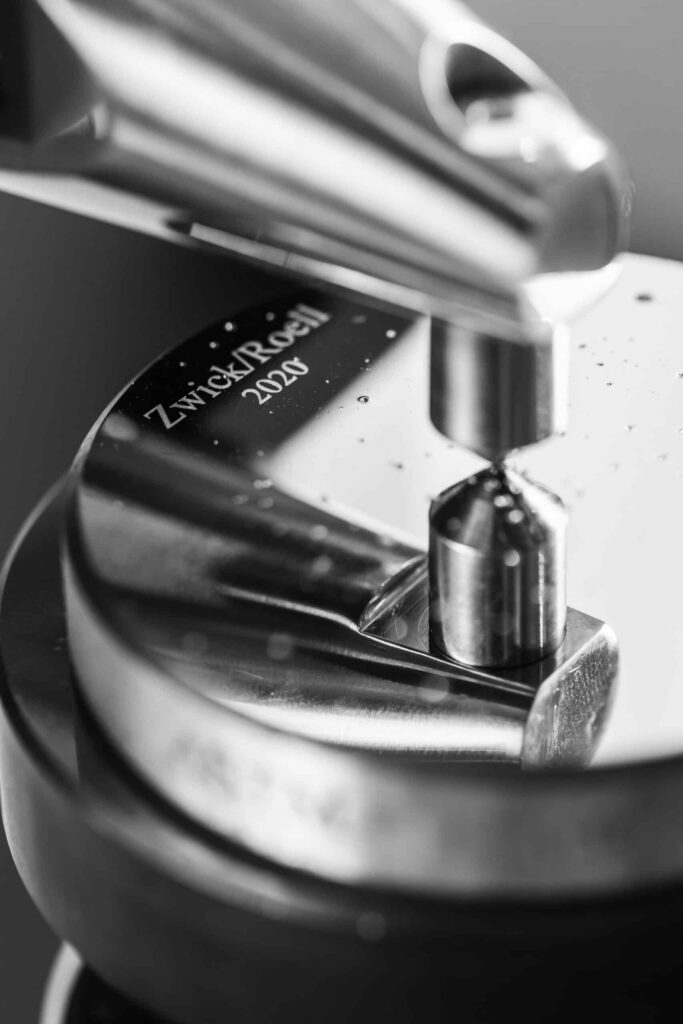
In the Knoop hardness test, a very small indentation is created on the surface of a material using an elongated, pyramid-shaped diamond indenter applied under a controlled load. Because this method produces extremely small indentations, it enables highly accurate hardness evaluation and is particularly useful for testing thin coatings, surface layers, and delicate materials. SHOP OUR BLOCKS NOWThe Importance of Hardness Testing Dudley
Hardness testing is a vital tool for ensuring the performance, durability, and quality of materials. It can be used to:
- Assess material properties: Hardness testing helps determine a material’s strength, ductility, and resistance to wear.
- Monitor manufacturing processes: It provides an effective way to track production quality and identify potential issues during manufacturing.
- Select the right materials: Hardness testing supports informed material selection for specific applications and operating conditions.
- Investigate material failures: By analysing hardness values, the causes of material failures can be identified and addressed.
Get Started Today With Indentec in Dudley
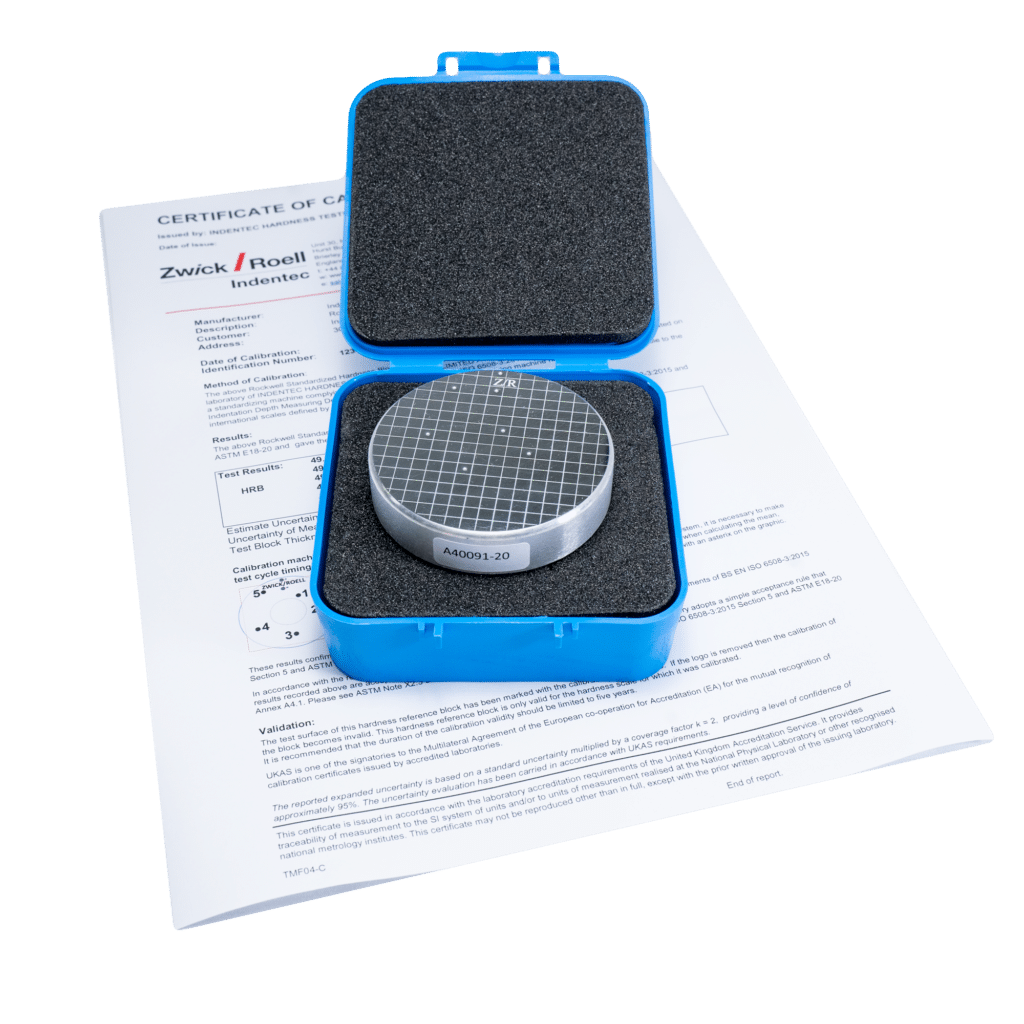
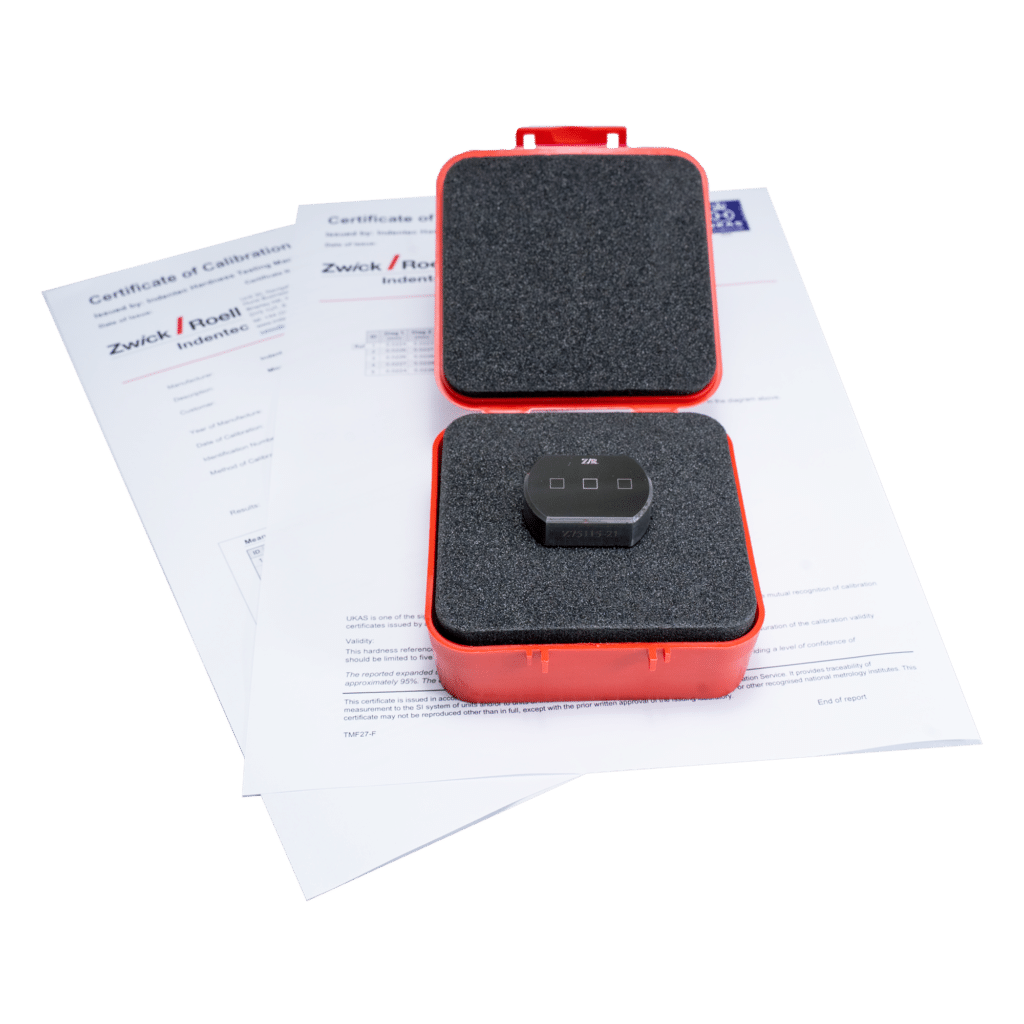
Partner with Indentec to ensure both the reliability and quality of your hardness testing equipment. With our certified hardness test blocks, your Dudley-based business can achieve exceptional accuracy, repeatability, and confidence in hardness measurement. Contact our team today to learn more or to order your hardness test blocks in Dudley. Contact us
Hardness Test Blocks FAQs
What are hardness test blocks used for?
Hardness test blocks are precision-engineered samples with a known hardness value. They serve to calibrate and validate the performance of hardness testing machines, ensuring consistent and accurate readings.
How are hardness test blocks utilized in calibration?
In the calibration process, a hardness test block is positioned beneath the machine’s indenter, which then measures its hardness. The result is compared with the block’s certified hardness value, allowing verification that the testing machine delivers accurate measurements.
What types of hardness test blocks are available?
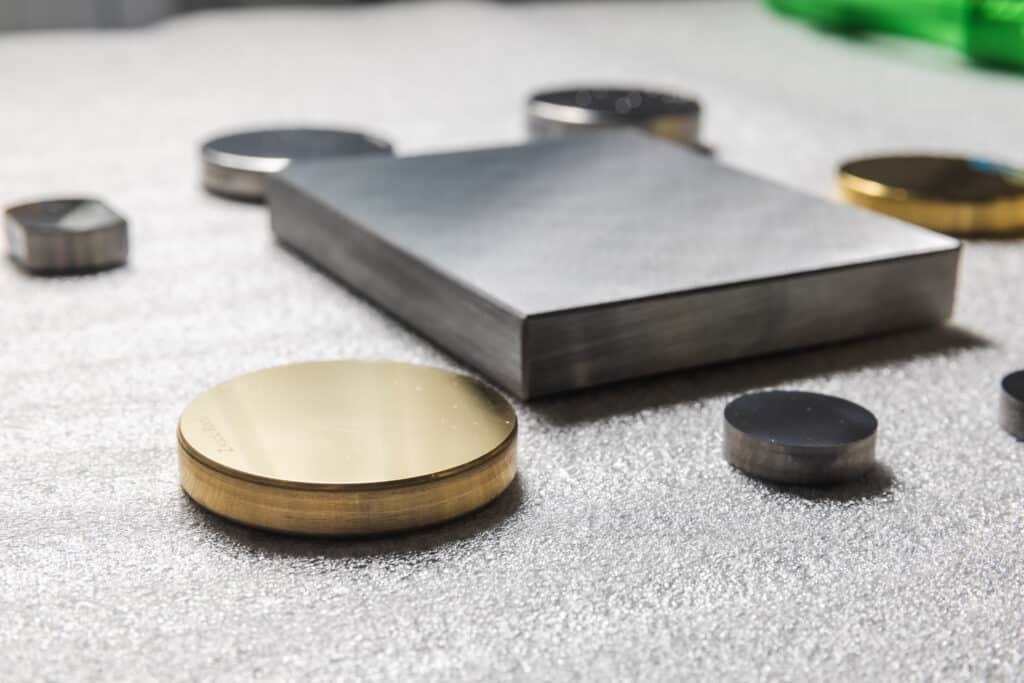
Hardness test blocks come in various shapes, such as cylindrical, rectangular, and spherical forms, and are made from materials like steel, tungsten carbide, or ceramics to suit different testing requirements.
How frequently should hardness test blocks be used for calibration?
To maintain measurement accuracy, it’s recommended to calibrate hardness testing machines at set intervals—typically once a year or after a defined number of uses—using certified hardness test blocks.